Monday, August 13, 2018

Distractions and Diversions

What's happening on the Old Line Corridor: Designdyne/
Shapeways Pennsy Catenary Towers with black primer
 and mounted with magnets on roofing nails.
It's been over a year since a new Up Dunes Junction post, with distractions and diversions aplenty keeping me from both my Dunes Junction and Old Line Corridor layout projects. In addition to the usual array of grown-up cramps to my style, such as work, family, real estate, and the rest, old and new hobby activities have been vying my very scarce spare time.

First, new activities: A work friend and my younger son introduced me to the new generation of board and miniature gaming, which has become a surprise new interest. X-Wing, Catan, and Eclipse are my favorites, and I find the social scene and camaraderie to be an unexpected delight.

I've also been participating in Washington DC's storytelling scene. You've read here before about my interest, nay even love of the the spoken word, and the kind of storytelling I've been involved in so far has been akin to The Moth or This American Life on NPR (available as podcasts or broadcasts). It has been surprisingly fun and rewarding. Here's a link to a recent performance I gave at Washington DC's Story District.

Just not railroad modeling:
 workbench with armored
vehicle kit construction
in progress
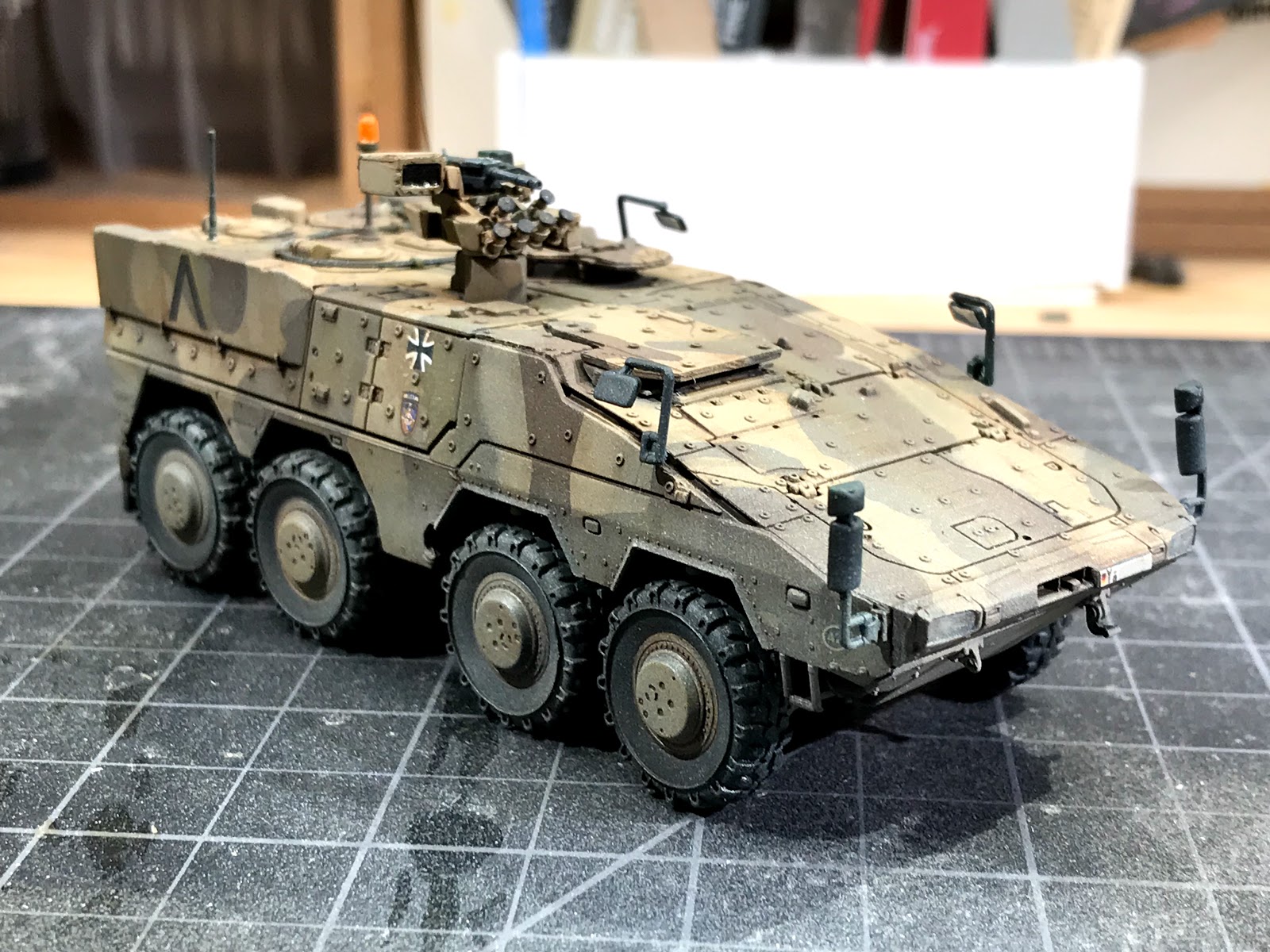
Modeling has been going on, just not railroad modeling. It all started with the miniature gaming, particularly the beautifully finished miniatures for Fantasy Flight Miniatures's X-Wing and Armada games, set in the Star Wars universe. I acquired a miniature of Tantive IV, the first spaceship visible in any of the Star Wars movies (Princess Leia's cruiser, boarded by Darth Vader and his stormtroopers in the first few minutes of the original Star Wars movies). produced by Fantasy Flight for X-Wing. I vaguely knew it was a gaming miniature--but I wanted it because it was a beautiful model. In my quest for more Star Wars models, I stumbled upon Zvezda's state-of-the-art kit for the Imperial Star Destroyer from Star Wars. It's close to 30" in length when finished, and required nary a sliver of filler putty to assemble.

Zvezda Star Destroyer dominating my
workbench
With my appetite for plastic model assembly thoroughly stimulated, other kits caught my eye and I went on a bender of armor modeling, mostly in 1/72 scale. The small-ish military models are appealing to me in much the same way as N scale train models. Along the way, have caught up on a variety of new finishing techniques that will be put to good use in my model railroading projects.

Model railroading continues, albeit at a slower pace. Have put my hands on a couple of new locos, notably a second Fleischmann Rc4 to be converted into an AEM-7. Catenary towers are now primed and installed all around the layout. And looking forward to sharing it here on the blog.


1/72 Revell GTK Boxer APC, Federal German Army

O, Canada! 1/35 Trumpeter Grizzly APC

The best tank ever fielded, but I'm prejudiced:
Tamiya 1/48 M1A2. An excellent, fun kit

S-Model 1/72 Sheridan Tank, the most fun of all to build and finish.


Friday, July 7, 2017

An Update on Electric Coal Haulers Out West from Bob Kaplan

Wire and pantographs under a big blue sky!
Photo used with kind permission of Robert S. Kaplan
One of my favorite railfanning and photography feeds is Bob Kaplan's Capitol Limited blog. Bob
travels the US and the world, and makes great photographs of the trains he sees. He's retired, so his travel tends--unlike mine--to have a lot more pleasure than business.

While I've never met Bob, I nonetheless look forward to his posts, to see where he's been and what kinds of trains he's seen lately.

I was delighted recently to see that Bob had been out railfanning electric coal haulers out in the desert of the Four Corners region of Arizona, Colorado, and New Mexico.
Go check out the great photos of the Black Mesa & Lake Powell that Bob brought back. BM&LP still hasn't repainted the for Nacional de Mexico E60s that I snapped back in 2005, but electrics under the big desert sky are still thrilling!

On a sadder note, Bob reported that one of the other electric coal haulers in the region, Navajo Mine, is momentarily closed and will not be operating its E60s much longer. Navajo has already been on the way to dieselization with the addition Alco C425s as helpers (if diesels absolutely must help electrics, OK, I can live with a late model Alco) but is set to take delivery of new General Electric EVO diesels. I'm sure there's some compelling cost modeling in there that makes new, super efficient diesels a better business case, but still--sad to see an electric operation go dark.

Check out the rest of Bob's blog--he gets to see a lot of trains, which he generously shares.

Friday, June 2, 2017

ACS-64 Heritage Units, Some of My Favorite Photoshoppery

Go look at it here, and Facebook users can find the source post on the Facebook 'Rail Enthusiasts' group. Commenters have worked up some other variations.  The Pennsy ACS-64 looks awesome, would like to see one in New Haven McGinnis colors.

Friday, May 26, 2017

Real Life, Modern Day Crooked Mountain Lines . . .

Would have looked something like this. Bob Hegge named places on his O scale Crooked Mountain Lines after actual railroad locations in Switzerland, so the resemblance probably isn't a coincidence. Tee-Man's blog is regular stop for me--he's doing some inspirational global railfanning.

Monday, April 24, 2017

Catenary Tower Experiments

5mm magnets countersunk into 3D-printed
catenary tower bases. I found a set of 50
magnets and a drill bit for less than $20
on Amazon.
An unexpected slot of free time emerged this past weekend, which gave me the opportunity to work on Old Line Corridor catenary towers. As reported in my last post, Ed Kapuszinski showed me how he mounted his abandoned catenary towers with rare earth magnets on his Conrail layout. When I first walked in to see his layout, I noticed one his towers leaning at a 45-degree angle; when I glanced at it again a few minutes later it was plumb-straight. He showed me how magnets embedded in the tower bases were stuck to small countersunk screws driven into the road bed. The towers could withstand an errant wrist and be removed for rerailing and track cleaning. I was sold on the idea immediately; here's how I started implementing it on the Old Line Corridor.
A drill stop collar ensured uniform mounting holes for the magnets. The 3D printed towers ain't cheap, and I didn't want to ruin any of them by drilling too deep into the tower bases.  

Remember when I put in HO catenary bridges and made all kinds of jigs? Here's a jig in progress on my workbench. I made this jig to ensure uniform placement of mounting nails into the roadbed.

Mounting nails placed into the roadbed. This is the experiment part: I can't decide which to use. The top is a roofing nail; bottom is a carpet tack. Both have a thin, flat head. The roofing nail  is bright silver, has a fat shank and uniformly flat, square heads. The carpet tack is more svelte, finished  in black and has a skinny shank but but the heads are frequently flawed and not square. Thinking of trying thumbtacks next. Fortunately, all are easy insert and remove from the cork roadbed and foam subroadbed. 
A glimpse of the future: catenary towers magnetically installed on the Old Line Corridor main line. The towers form a visual picket, a compositional rhythm, that transforms the look of the layout. and sets the place: the Northeast Corridor. Some world famous model railroader recently told me he thought catenary was ugly--I respectfully disagree, and I'm excited to have this visually compelling feature on my layout! 

Saturday, April 15, 2017

Purloining Good Ideas on the Old Line Corridor

Just now, while I was writing this caption, I decided this will be called 'Old Line Highway'. This is an overhead shot of the in-progress Old Line Highway at the front of the layout. I cut it from a very large sheet of .030" styrene so as to minimize joints. After spray painting it a warm lightish gray, I stenciled in dividing lines with cheap yellow craft paint and added weathering tracks in each lane with dark gray pan pastels. I stole this idea from a Lance Mindheim blog post gave me this idea, and I think an article in either Model Railroader or Model Railroad Hobbyist gave me the idea for the stenciled yellow lines.  

Another view of Old Line Highway from the wilderness end of the layout. The styrene roadway is glued directly to a failed road experiment in which I tried Woodland Scenics Smooth-It. I suspect the Smooth-It might work best in HO or larger scales and on a relatively flat surface; most of Old Line Highway is on a grade and curved. Next steps will include building up a gravel shoulder and inking in some expansion lines and patches.

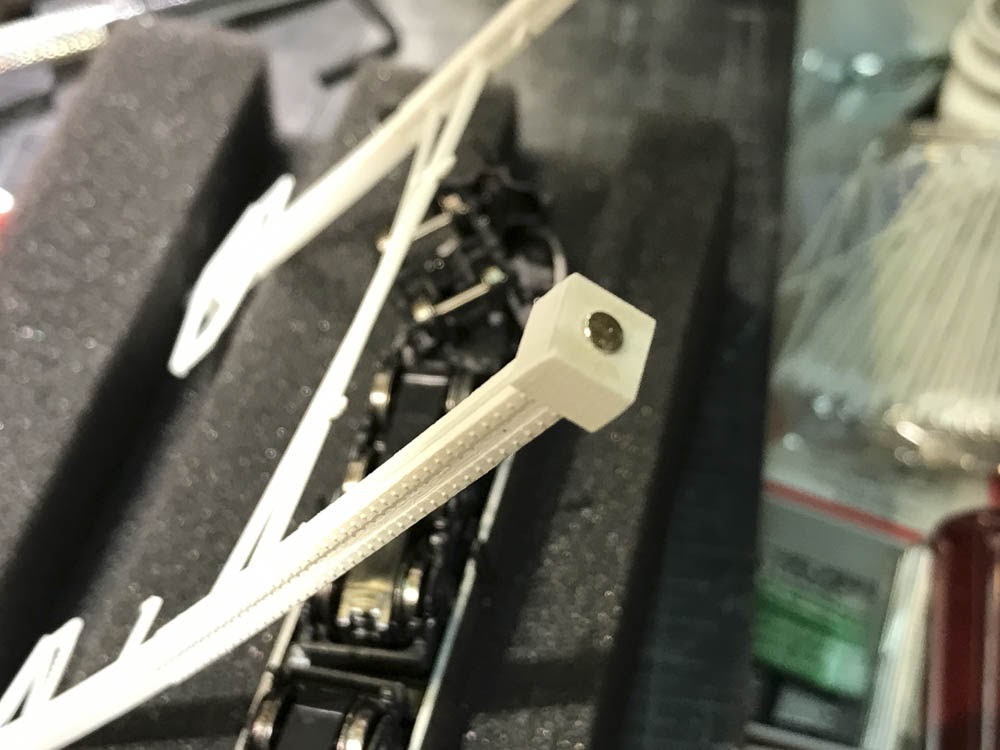
I stole this idea from Conrail Modeler extraordinaire Ed Kapuscinski, who stole it himself from another Baltimore area modeler. It's a 5mm rare earth magnet disc countersunk and cemented into the base of a 3D printed catenary tower. Hopefully it will be the basis for a strong mount that 'fails beautifully' when these catenary towers are inevitably bumped and jostled for track cleaning, rerailing, and scenery maintenance.

The magnets are strong! Here's one of the towers stuck to a stainless steel ruler. If this were a GIF or video, you could see it withstand a lot of movement and jiggling. My tentative plan is press wide-headed short roofing nails or carpet tacks into the roadbed, which the magnetic tower bases will then grip.

Friday, April 7, 2017

Sound + Vision on Trevor's Port Rowan

This is a treat to watch and listen. Bravo, Trevor--now I'm thinking about how to incorporate sound for heavy electric--singing wires and what not.

Friday, March 31, 2017

Hey Big Model Railroad Media: Where's the Audio Content?

The revolution in big model railroad media is being televised, or at least video-streamed on the internet. But why hasn't the big model railroad media revolution also included podcasts and audio content?

Big Model Railroad Media is Fighting the Video Insurgency...

Big Model Railroad Media such as Kalmbach, Model Railroad Hobbyist, and former Kalmbach video guy Allen Keller all have rolled out paywalled video services. They are all professionally produced and edited, and bring to life much of the art and craft of model railroading.
Watching tree making and airbrush techniques, for example, on Trainmasters.tv, boosted my confidence and took the mystery out of methods I should have learned decades ago.
Video tours of layouts also are both impressive and humanizing in a way that staged and static magazine photos often are not. I've particularly enjoyed seeing Bob Hayden and Dave Frary's Carrabasset and Dead River and Tom Piccirillo's Somerset County Traction system layouts--among many others--on video.
Big professional model railroad video is in large part big model railroad media's survival response to shrinking circulation of paper publications. Remember when the local drug and grocery store had most of an aisle of magazines, including Model Railroader and Railroad Model Craftsman? Now it's 6 or 8 feet of magazines, and not a hobby magazine in sight. Model railroad video content, paid up front instead of print media paid by ads, is the idea here. Kalmbach and MRH in particular have positioned their video as complements or adjuncts to their magazine offerings.
Big professional model railroad video is also a response to insurgent small amateur model railroad video, which has sprung up like weeds on YouTube. Big model railroad media has noticed that some of these small do-it-yourself video makers actually are competing with the old magazine-centric model of big model railroad media. For starters, YouTube channels command significant audience numbers--James Wright's thorough and informative model railroad video product review channel has over 28,000 subscribers, Kathy Millatt's charming and edifying how-to channel has over 4,500 subscribers. There are lots of other individual model railroaders posting to YouTube as well, and there's even a group called YouTube Modelers that--in a twist--even publishes its own online magazine.
There is a more ominous competitive threat to Big Model Railroad Media than insurgent collectives of video- and magazine producing model railroaders, and that is how YouTube is changing model railroad commerce. Model railroad manufacturers have already taken notice of the power of online video to connect with customers. Hobby manufacturers and retailers who formerly connected with consumers almost exclusively via ads bought from Big Model Railroad Media now have their own YouTube channels. Woodland Scenics and MB Klein are two excellent examples.
And remember James Wright with his 28,000 subscribers? His YouTube reviews are now a sought-after venue for showcasing new model railroad products and events. In short, YouTube and online video are an alternative to ads in Big Model Railroad Media--why would manufacturers pay money to put ads in big model railroad magazines if a popular YouTube reviewer or your own marketing and video people can show sights, sounds, and motions to a world of Internet users?
I'm currently signed up to all of Big Model Railroad Media's paywalled sites, and I put a fair bit of mileage on several of the YouTube channels. Not sure if I will keep the subscriptions over the long haul, but I would gladly gift them to a newby in lieu of a how-to book or old model railroad magazines, much same way I was helped at the beginning of my model railroad interest. I'll admit that I don't consume video content like "normal" people do: my TV consumption has always been minimal, thanks to a childhood more or less without TV.

...But Big Model Railroad Media is Sitting Out the Audio Insurgency

But I did hear a lot of radio as a child and young adult, so there's another internet-based form of broadcast-like communication that has more appeal to me than video, and that's podcasts. Podcasts are free and easily accessible via smart phone or computer. Why hasn't Big Model Railroad media launched into podcasting to showcase their strengths--access to the industry and prominent model railroaders, tightly edited expert content--and cross sell their money making magazine and video offerings?
There are a number of model railroad podcasts currently available on iTunes or other sources, most of which enjoy significant listener bases. Some are updated regularly; others are out of production with archived back episodes available. I've mentioned my favorite, Trevor Marshall and Jim Martin's  The Model Railway Show, several times here before, and though out of production, its archive is thankfully still available. I also listen occasionally to Lionel Strang's A Modeler's Life, Tom Barbalet's Model Rail Radio, and Mike and Scotty Live. There are others as well.
So far, model railroad podcasts have been grassroots undertakings, typically produced by one or a few folks on a part time basis, with bare bones production. The result is that most model railroad podcasts--like most podcasts generally--tend to be a few people talking in an unedited, meandering conversation for long period of time. For model railroad podcasts, the long conversation format works fairly well, with each of the above podcasts reaching thousands of loyal listeners.
But there's also room, maybe even a need, for another approach to model railroad podcasts besides a couple of dudes cracking in-jokes and talking about trains for an hour or two . For example, how about a radio show-like podcast with a host or hosts that is edited and switches between interviews, stories, and industry news?
Big model railroad media or maybe even a large organization such as the National Model Railroad Association (NMRA) are in the best position to launch such a podcast--it's not that great a leap from the editorial and production capabilities required to produce a magazine or video to produce a radio show-format podcast.
The best example of the potential for high-production value, radio show-like model railroad podcasts was the The Model Railway Show mentioned above. It was scripted and featured news, stories, and interviews. To be fair, the show's hosts, Trevor Marshall and Jim Martin, are veteran radio journalists, and their skill and experience was evident throughout each tightly crafted episode. However, TMRS demanded significant time and attention to create, and ultimately Trevor and Jim stopped producing the show so they could focus on their own model railroad pursuits.
Indeed, there are other tantalizing precursors or elements of professionally-produced, Big Model Railroad Media radio show-style podcasts already out there. Model Railroad Hobbyist already has a traditional, monthly (or so)  'couple of dudes talking for an hour or two' podcast. Model Railroader editors have monthly (or so) videos like 'Inside Cody's Office', highlighting new products and industry, as well as separate video previews of the upcoming magazine issues. Could MR not re-fashion these kinds of periodic video offerings into an engaging podcast? Perhaps White River Productions (publisher of Railroad Model Craftsman, Model Railroad News, and other train-focused magazines) could venture into this space with a monthly or weekly radio show-style podcast.
As Trevor and Jim's experience shows, serious podcast production requires serious production wherewithal--it's really more than a hobbyist with a day job can be expected to do. Which is why Big Model Railroad Media players ought to offer podcasts as a digital adjunct to their print and video products.

Friday, March 24, 2017

Great Video of a Visit to Lance Mindheim's CSX Downtown Spur Miami Layout!


Tolga E, a.k.a brickbuilder711, recently visited Lance Mindheim's CSX Downtown Spur Miami layout. I have visited Lance and his layout in the past and this video captures the experience nicely.

Friday, March 17, 2017

Old Line Corridor Progress Report, March 2017

It's been a while since I've posted progress shots of the Old Line Corridor. Have been away on a lot of business travel this spring, but I've been very disciplined about making progress on the OLC on my weekends at home. In this wide shot, the masonite fascia and  progress on scenery and roughed-in roads and structures is evident.
A hundred or so trees make up that treeline and view block. Most were made using SuperTrees, but there's also a substantial number of Woodland Scenics plastic armature trees and 'cheap Ebay trees' in the background. Don't forget the fun and fanciful train running: an Allegheny Midland unit train meets Amtrak Regional service. That ACS-64 is reaching its pantograph up proudly; one day soon it will look right at home under a picket of Shapeways/DesignDyne NEC catenary towers.
It's that 70s show over on the other side of the layout. In the upper right of the photo, there are a failed road experiment and two blank tan places for more structures. Another tall-ish curtain-walled factory will go into the spot next to the tracks, further blocking the view down the road to the other side of the layout. The spot across the road, currently occupied by a plastic cup, will be one of those mysterious dilapidated trackside businesses with dozens of abandoned containers, trucks, and construction machines. The new ESU ECoS 2 command station and a repurposed iPhone controller is visible on the bottom left; the shelf is a clamp-on keyboard drawer that is just deep enough to accommodate the ECoS 2.
The in-progress highway bridge is kitbashed from Rix components and Evergreen styrene strip stock, and temporarily pinned to the foamboard with T-pins. This is one of my favorite features of foam benchwork, though I'm not sure I'll use foam as extensively for future layout construction. 
Trains run through it. Even though the scene is incomplete pending installation of catenary towers. more trees on that cut on the left, and right-of-way details, this photo shows that you really can do big-time railroading in a modest space in N scale. I find myself spending significant time just running trains, something I never do on my HO scale Dunes Junction.


Friday, March 10, 2017

That Didn't Take Long: Populist Politics and Model Trains

In the latest Rapido trains newsletter, Jason Shron coolly and factually explains how Brexit has already negatively impacted Rapido, and what negative impacts prospective changes in US trade and China policy--such as increased trade tariffs--are likely to have on Rapido and across the model railroad industry. 
Jason is the energetic boss of Rapido Trains Inc. and the Rapido News is a must-read email whenever it comes, always informative and entertaining. He is a tireless explainer of how the model railroad industry works and he is transparent about Rapido's project status and delivery schedule--including bad news about delays, setbacks, and disappointing sales.
"We're proud of the open relationship we have with our customers," writes Jason in his latest  email newsletter. 
Read Jason's thoughts on the topic here:
Rapido News Vol. 86 - Big order deadline and new videos

Friday, March 3, 2017

Visit to Ed Kapuscinski's N Scale Conrail Layout

Ed Kapuscinski blogs about his Conrail modeling in N scale at his Conrail 1285 blog, and his layout and modeling showcase the potential for prototype modeling and operation in N scale. Ed is strongly connected to the Conrail Historical Society, and it shows. His layout certainly evokes a gray mid-80s winter/spring day in the York, PA-Baltimore area,  and this post in particular caught my attention because of the catenary bridges.

Here's a view across Windsor Street Yard on Ed's Conrail layout. The overall impact is an immersive and convincing experience: his scenery and weathering, photo backdrop, and rolling stock choices make it difficult to tell at a glance just what scale this is, and set the time and place. I was feeling a cold wind and and thinking of bad 80s top 40 radio just looking around! 
I had a chance to see Ed's layout when he graciously hosted an open house on a recent Saturday (that's the back of me in the black hat and gray shirt). Ed and his friendly crew not only showed off the awesome and a-building layout, but made sure everyone who visited were welcomed and oriented. No small feat managing a crowd during an N scale layout tour--even a generous-appearing space is deceptively small on all but the largest N scale layout. Ed generously spent time chatting with me, mostly about NEC catenary and scenery modeling. He showed me his indestructible catenary tower mounting method, which uses magnets to 'fail beautifully'--will be experimenting with this approach myself for my Shapeways/DesignDyne catenary tower installation.

My biggest takeaway from my visit to Ed's Conrail layout had to do with atmosphere. Ed's layout transported me to a time and place. He accomplished this with color and composition--particularly scenery choices, weathering, and photo backdrops. The number, size, and shape of his trees particularly impressed me, and vindicated some of my own scenery strategy--I feared that many of my trees were too big but both my reference photos and now Ed's layout show that 3-5" trees are appropriate for the mid-Atlantic seaboard in N scale. Ed didn't have layout sound (that I noticed, anyway) but during our conversation about the NEC and wire, Ed brought up 'singing wire', a phenomenon familiar to anyone who has been trackside on the NEC or any other electrified mainline. We wondered if it had ever been modeled--and now I think I might need to figure that out for the Old Line Corridor!

Looking forward to seeing more of Ed and his work in the future!
Crossing the bridge near CP Loucks (I think). The blending of colors, texture, and weathering gives Ed's layout a prototype feel. And his trees are appropriately proportioned! 

Friday, February 17, 2017

Chris Mears, a model railroader of distinctive taste

I regularly read Chris Mears' Prince Street blog for the model railroading, but his posts often hint at his off-layout appetites and interests. If he lived in Washington DC, he's probably someone my wife and I would run into at a music show or in a craft beer tap room.
In a post titled "Here we go again", Chris talks turnout building and name-checks two of our favorite musicians, Reverend Horton Heat and Melody Gardot. Just to clear up, one is a raucous acid-soaked rockabilly act from Texas, the other a sultry jazz lounge chanteuse--not two music names one is likely to hear in the same breath. Nonetheless, both of these performers have provided the soundtrack to building Dunes Junction and the Old Line Corridor, and it was validating to hear that another modeler out there is jamming to the same tunes.
In case you're interested in hearing what Melody and the Reverend are all about, check out these clips:
Here's the Reverend on the Conan O'Brien show in the 90s, around the time this song, "Big Red Rocket of Love" was used in a Mazda commercial.

In the same post, Chris mentions the intriguing sounding Hell’s Bay Brewing Dark Cream Ale, and in a post titled "7 Days of Beer" (mentioned in my Man Craft/Tree Making post), he gives a good summary of the Prince Edward Island craft beer scene. Chris, if you're reading this, let me know if you find yourself in Washington, DC, the beer will be on me.

Friday, February 10, 2017

Industrial Scale Man Crafts, AKA Tree Making

Even a relatively small layout portraying the Northeast like the Old Line Corridor requires a lot of trees. Fortunately, I really enjoy making them! Here's 80 or so SuperTree armatures drying; they've been soaked in matte medium and spray painted with Montana Gold 'Dark Manila', a washed out, muddy gray brown color. Paging Chris Mears of the Prince Street blog: note the use of recycled craft beer packaging is here, in this instance a couple of empty Southern Tier Choklat four-packs. (Awesome chocolate stout, well balanced bitter chocolate flavor set off by high gravity flavor)

A batch of 60 or so cheap Ebay trees and Woodland Scenics plastic armature trees already planted as a background treeline. I used Kathy Millatt's cheap Ebay tree improvement techniques to pretty up these wire-armature trees. I made a package of the Woodland Scenics plastic armature trees and found them confounding to make as well as too coarse to place next to delicate-looking SuperTrees.